
24/7 Emergency Smoke Damage Restoration in Topsfield
24/7 emergency smoke damage restoration in Topsfield and surrounding areas. IICRC-certified, insurance billing accepted. Call (800) 393-1532.
Smoke damage emergency in Topsfield? Call Restore & Repel now. We answer 24/7 and bring IICRC FSRT-trained technicians to assess soot penetration, odor source, and the materials still absorbing smoke byproducts hours after the flames are out.
Smoke doesn’t stay where the fire started. Within minutes, combustion particles travel through HVAC returns, settle into wall cavities, and bond with plastics, fabric, and finished wood. A kitchen grease fire can leave a sour, acidic residue three rooms away, and a smoldering wood-stove flare-up can push smoke into insulation and subfloor long before anyone smells it in the living room. The longer that residue sits, especially on humid days, the more it etches into finishes and the harder it is to lift without refinishing or replacing the surface.
What smoke damage restoration actually involves
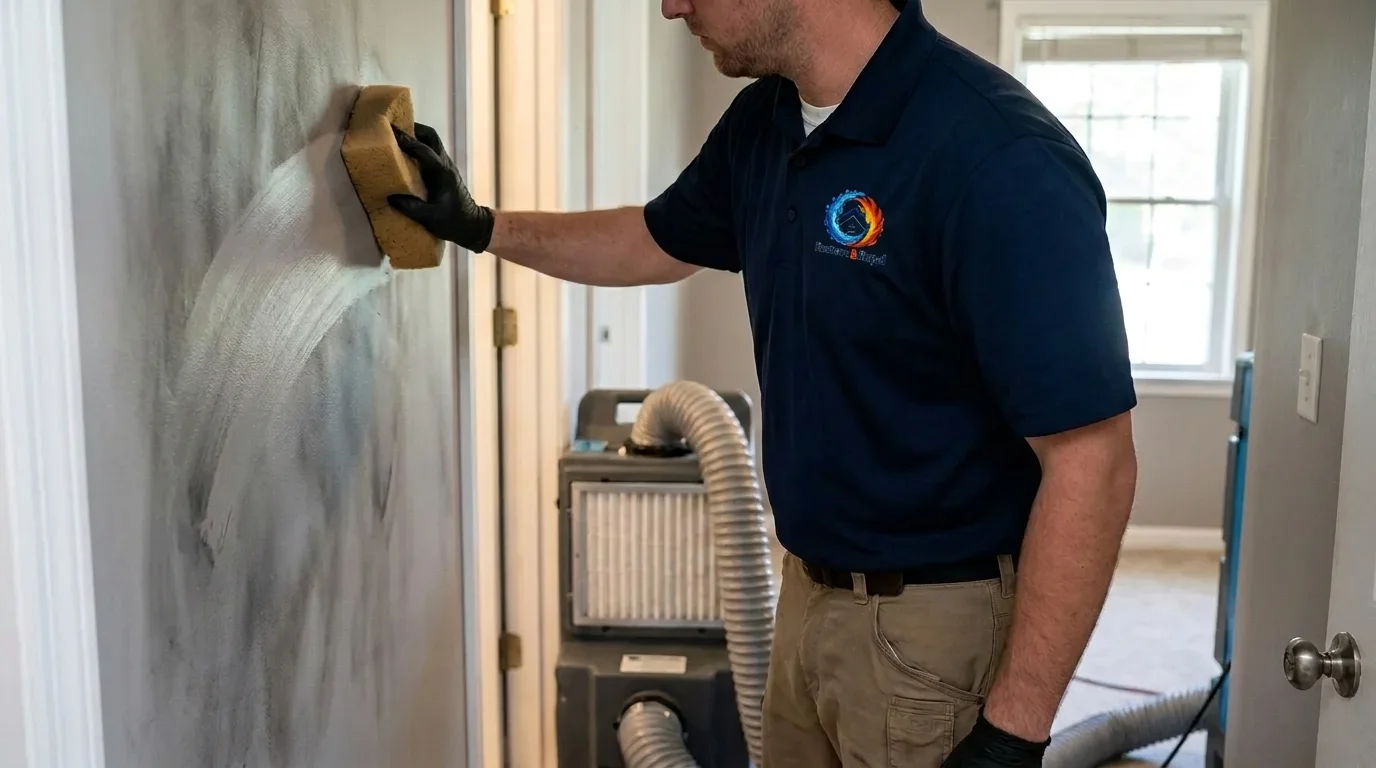
Smoke damage restoration is not the same job as fire damage reconstruction, and it’s not a general cleaning. It’s residue identification, chemical neutralization, and odor elimination at the molecular level. Technicians test surfaces to identify whether residue is dry protein soot from a low-heat, smoldering fire (often a scorched pan or an electrical short) or wet synthetic soot from a fast, hot fire involving plastics and synthetics, because the two require different cleaning agents and different pressure. Equipment typically includes HEPA vacuums, dry chemical sponges, thermal foggers, hydroxyl or ozone generators, and in some cases media blasting for masonry or structural wood. Timelines vary with the size of the fire and the porosity of affected materials, but odor-neutral clearance on a contained single-room event is a different scope than a whole-house smoke migration through ductwork.
Our process
- Soot characterization. We identify the soot type (protein, fuel/oil, synthetic, or wet smoke) because using the wrong cleaning method can set residue permanently into a surface.
- Source and migration mapping. We trace how smoke traveled through HVAC returns, wall cavities, and ceiling assemblies, not just the visibly charred room.
- Surface and content cleaning. Hard surfaces are cleaned with soot-specific solvents or dry sponges; soft contents go through specialized cleaning or are packed out for off-site treatment.
- Thermal fogging and odor encapsulation. Thermal fogging drives deodorizing agents into the same pathways smoke used to penetrate the material, which is why surface wiping alone rarely resolves odor.
- Ozone or hydroxyl treatment and final verification. Odor-neutral verification confirms the space is ready to be sealed, repainted, or returned to normal occupancy.
What separates a good smoke damage response from a bad one
The most common mistake is treating smoke damage as a surface cleaning job. Wiping down walls and running an air freshener masks odor temporarily but leaves residue bonded in porous materials, and the smell returns within days, especially in humid weather. A thorough response tests HVAC ductwork and return vents, since smoke recirculates through the system long after the fire is out, and skips nothing behind outlet covers or inside closets where residue pools. Insurance adjusters generally look for documented soot characterization, moisture readings if water was used to fight the fire, and a clear line between what was cleaned versus what required replacement, so incomplete documentation is one of the most common reasons claims get delayed or underpaid.
What does smoke damage restoration cost?
Costs depend on the soot type, how far smoke migrated, and whether HVAC and contents cleaning are involved. These are typical industry ranges, not a quote: every loss is different, and Restore & Repel provides a written scope of work before any cleaning begins. Homeowners insurance typically covers smoke damage restoration when the fire was accidental, though coverage details depend on the policy and the carrier’s assessment of the loss.
| Scenario | Typical range |
|---|---|
| Single room, light surface soot | $500 - $1,500 |
| Multi-room smoke migration, HVAC cleaning included | $2,500 - $6,000 |
| Whole-house protein soot from kitchen fire | $5,000 - $12,000 |
| Synthetic/wet soot with contents pack-out | $8,000 - $20,000+ |
| Odor-only remediation (no visible soot) | $750 - $2,500 |
Seasonal & regional considerations
New England winters push more wood-stove and fireplace use across Essex County, and older Topsfield homes with original chimneys or converted wood-burning inserts are more prone to creosote-related smoke events than newer construction. Closed-up winter homes also trap smoke odor longer, since reduced ventilation slows the natural off-gassing that would otherwise help odor dissipate. During regional wildfire smoke events, homes can pick up a persistent haze odor through HVAC intake even without a fire on the property, which calls for duct and filtration cleaning rather than surface treatment.
Service area
Restore & Repel is based in Topsfield and handles smoke damage restoration throughout the surrounding Essex County communities, from historic colonial-era homes with original plaster to newer construction with more complex HVAC zoning.
If your home still smells like smoke days after the fire department left, don’t wait for it to fade on its own. Call Restore & Repel to begin smoke and soot removal with a documented scope your insurance carrier can review.
Services We Handle
- Soot Removal
Frequently Asked Questions
Does homeowners insurance cover smoke damage restoration?
Why does my house still smell like smoke weeks after the fire was put out?
What's the difference between protein soot and synthetic soot, and why does it matter?
Can smoke damage affect rooms the fire never reached?
Do I need to clean my HVAC system after a smoke event?
Watch: Smoke Damage Restoration in Topsfield
Looking for the best smoke damage restoration company in Topsfield?
Restore & Repel provides licensed and insured smoke damage restoration in Topsfield, MA and the surrounding area, and has served local property owners since 2003. Customers rate us 5.0 out of 5 stars across 2 Google reviews. We answer calls 24/7 — call (800) 393-1532 for immediate help.
Need Smoke Damage Restoration now?
We respond 24/7 across Topsfield and surrounding MA cities.