
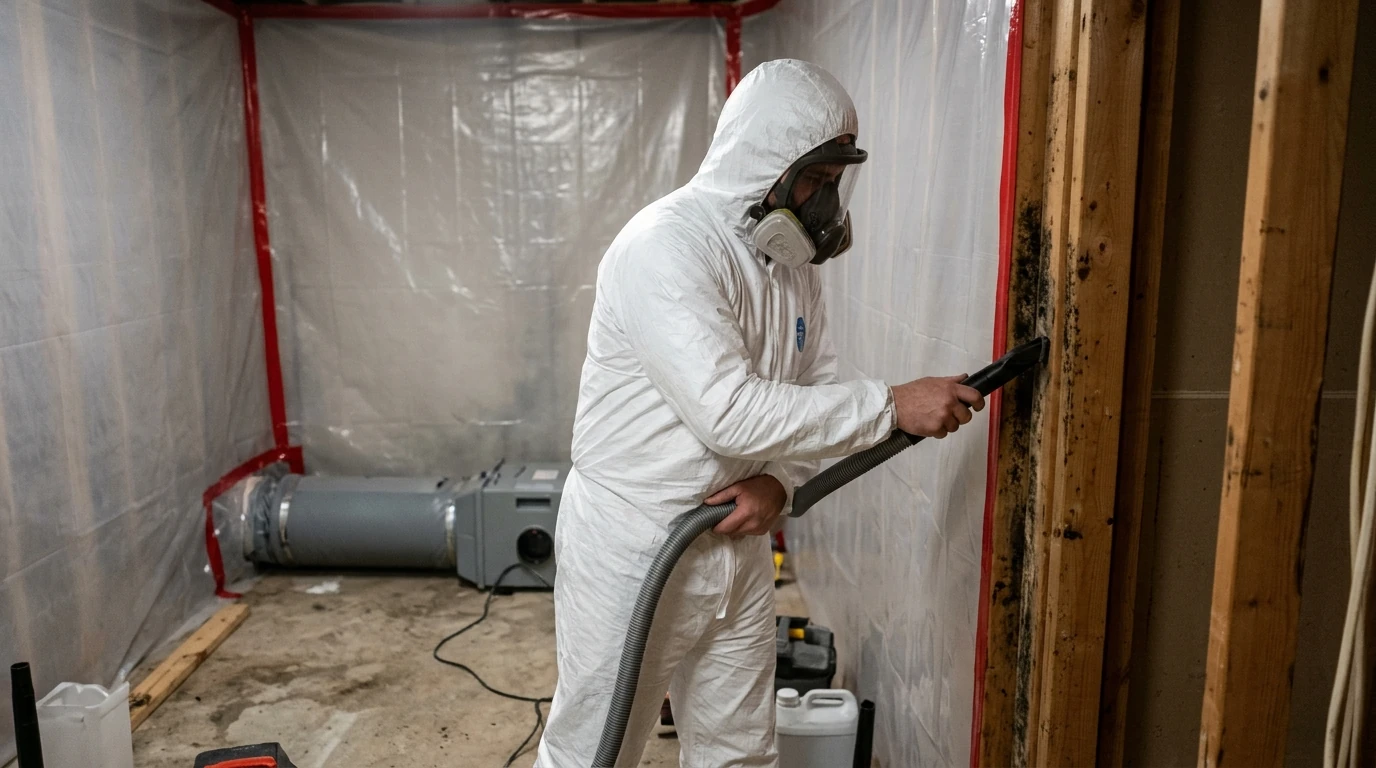
TL;DR: Mold remediation in Topsfield typically costs between $500 for a small, isolated spot and $20,000 or more for a whole-house job that reaches the attic, crawl space, and HVAC system. Most North Shore jobs, a moldy bathroom ceiling or a damp basement wall, land between $1,500 and $6,000. The biggest cost drivers are how many square feet are affected, whether porous materials like drywall and insulation have to be removed, and whether clearance testing is needed to close out the job.
If you just pulled back a water-stained ceiling tile in a Topsfield colonial and found a patch of black-green growth, or a home inspector flagged musty insulation in the attic before a sale, you need a real number, not a guess. Mold remediation pricing on the North Shore depends almost entirely on where the mold is and how far it has spread, not on a flat per-job rate. This guide breaks down what homeowners actually pay by room and by square footage, what insurance will and won’t cover, and why attic mold deserves its own section here thanks to ice dams and bath fans that vent straight into the attic instead of outside.
How Much Does Mold Remediation Cost in Topsfield, MA?
Mold remediation in the Topsfield area typically runs $500 to $20,000, depending almost entirely on the size of the affected area and which materials have to come out. A small, contained spot costs far less than mold that has spread through wall cavities, subfloor, or attic insulation.
| Scenario | Typical Cost Range |
|---|---|
| Small isolated spot (under 10 sq ft, e.g. under a sink) | $500 - $1,500 |
| Bathroom mold (shower surround, ceiling, moderate spread) | $1,000 - $3,000 |
| Basement mold (10-100 sq ft, walls or subfloor) | $2,000 - $6,000 |
| Crawl space mold | $2,000 - $6,000 |
| Attic mold (roof deck, rafters, insulation) | $2,500 - $7,500 |
| Whole-house / extensive mold (100+ sq ft, multiple rooms) | $8,000 - $20,000+ |
These are typical industry ranges, not quotes. Every job is different depending on what’s behind the drywall, how long the moisture source has been active, and whether the home has finished or unfinished space. A legitimate remediation company inspects the area and gives you a written scope of work before anything gets torn out.
What Drives the Price: Size, Containment, and What Has to Come Out?
Price scales with the square footage affected, whether negative-air containment is required, and how much porous material, drywall, carpet, insulation, has to be removed rather than cleaned in place.
The main cost factors on almost every job:
- Square footage affected. More spread means more containment, more labor hours, and more disposal.
- Containment setup. Jobs over roughly 10 square feet typically require 6-mil poly sheeting and negative air pressure under the ANSI/IICRC S520 mold remediation standard to keep spores from spreading to clean parts of the house.
- HEPA air scrubbing. Running HEPA-filtered air scrubbers for the duration of the job adds equipment rental time to the invoice.
- Demolition and disposal. Drywall, carpet, and insulation that has absorbed mold growth usually can’t be cleaned, it gets cut out, bagged, and hauled.
- Accessibility. A crawl space or a tight attic with limited headroom takes longer to work in than an open basement wall.
- Clearance testing. A third-party post-remediation verification sample adds a line item but documents that the job actually worked.
- Source repair. If the leak or ventilation problem that caused the mold isn’t fixed, the mold comes back regardless of how much was spent removing it the first time.
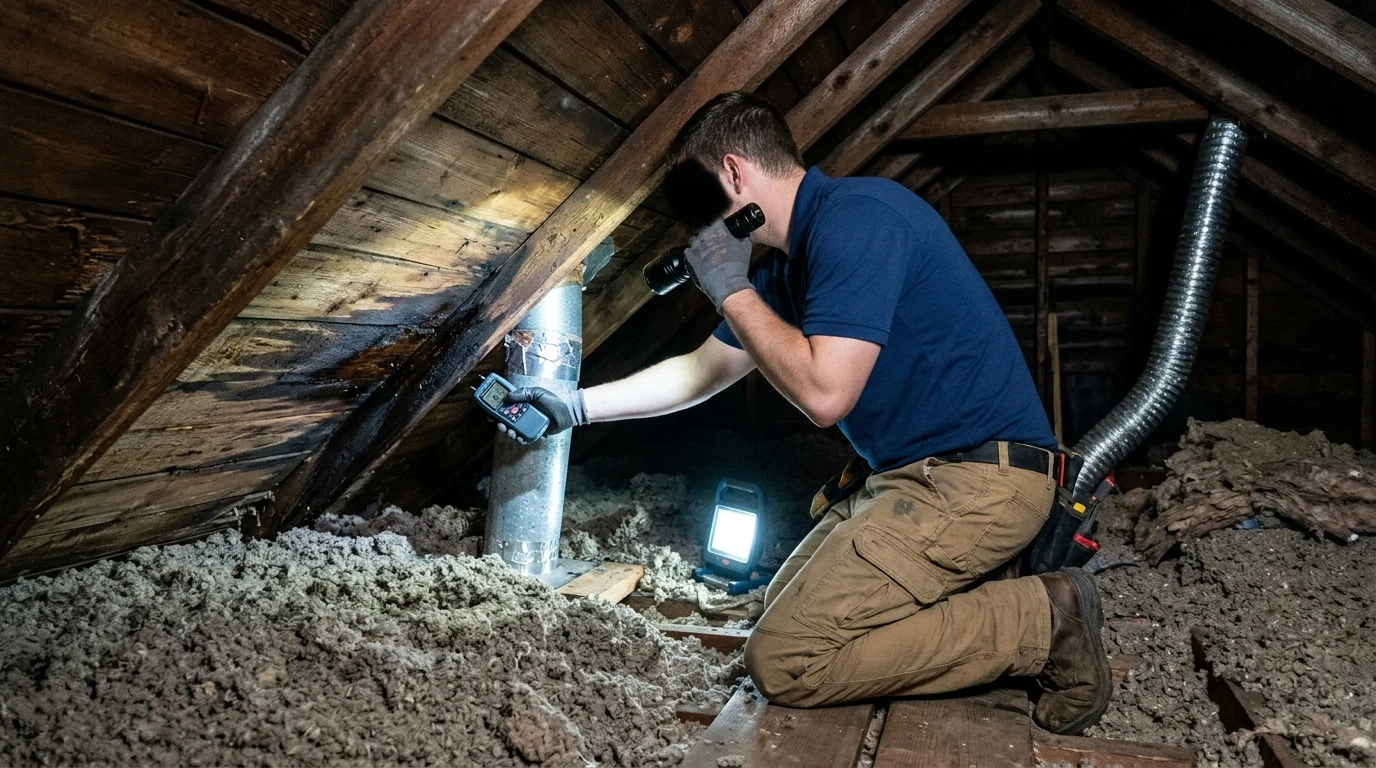
How Much Does Attic Mold Removal Cost on the North Shore?
Attic mold removal on the North Shore typically costs $2,500 to $7,500, more if the roof deck sheathing has to be replaced instead of cleaned and sealed.
Attic mold is common enough in Topsfield, Peabody, Danvers, and other older North Shore towns that it deserves its own line item. Two causes show up again and again in this housing stock. The first is ice dams: snow melts off a warmer upper roof, refreezes at the colder eave, and backs water up under the shingles into the attic space. The second is bathroom exhaust fans that were ducted straight into the attic instead of through the roof or a gable vent, a shortcut common in homes built or renovated decades ago. Every shower sends warm, moist air directly onto cold roof sheathing, which condenses and feeds mold growth on the underside of the deck.
Fixing attic mold usually means removing and bagging contaminated insulation, HEPA-vacuuming and treating the exposed rafters and sheathing, and, where sheathing has delaminated or stayed wet too long, replacing sections of the roof deck itself. Correcting the actual cause, rerouting a bath fan to a proper roof vent or adding ice-and-water shield and better attic ventilation, adds to the invoice but is the part that keeps the mold from coming back next winter.
Does Homeowners Insurance Pay for Mold Remediation?
Most homeowners policies only pay for mold remediation when the mold resulted from a sudden, covered loss, like a burst pipe, not from long-term humidity or a slow leak that went unaddressed.
If a supply line fails overnight and soaks a wall cavity, the resulting mold growth is often covered as part of that water damage claim, though many policies cap mold-specific payouts at a few thousand dollars even when the underlying loss is covered. If the mold grew slowly over months from a chronically damp crawl space, a leaking roof nobody repaired, or basement condensation, insurers typically treat that as a maintenance issue and deny the claim. The Massachusetts Department of Public Health’s mold guide is a useful reference for understanding moisture sources before you call your adjuster.
Documentation matters either way. Photograph the damage before anything is touched, keep the plumber’s or inspector’s report showing when and how the water entered, and save every receipt. Homeowners also have a duty to mitigate: fixing the source and starting drying promptly protects the claim regardless of which way coverage ultimately goes. For background on how water damage claims work generally, see our guide on homeowners insurance and water damage.
What Happens During Professional Mold Remediation?
A professional mold remediation job follows a set sequence: inspect and test, contain the area, remove what can’t be cleaned, treat what remains, dry it out, and verify the result.
- Inspection and testing. A technician does a visual assessment and moisture mapping, and may pull air or surface samples if the mold type or extent is unclear. Pre-remediation testing typically runs $300 to $900.
- Containment setup. Poly sheeting seals off the work area, and negative air pressure keeps spores from migrating to the rest of the house.
- HEPA air scrubbing. Air scrubbers run continuously through demolition and cleaning to capture airborne spores.
- Removal of non-salvageable materials. Drywall, insulation, and carpet that absorbed mold growth are cut out, bagged, and disposed of per EPA mold cleanup guidance.
- HEPA vacuuming and antimicrobial treatment of the remaining structural surfaces.
- Drying the area to target moisture levels before any rebuild starts.
- Clearance testing. An independent post-remediation sample, typically $300 to $600 per visit, confirms air and surface levels are back to normal before containment comes down.
Small, isolated spots under about 10 square feet can often be handled by a homeowner with gloves, a respirator, and a stiff brush, per EPA guidance. Anything larger, anything in HVAC ductwork, or anything a household member with respiratory issues will be exposed to calls for a professional.
Who Should You Call for Mold Remediation in Topsfield?
Call a company that holds IICRC AMRT mold remediation certification and will give you a written inspection and scope before any demolition starts, not a verbal price over the phone.
Restore & Repel employs IICRC-certified technicians based in Topsfield, licensed in Massachusetts (HIC #CS-113-396), and available 24/7. They inspect the affected area, document moisture readings for your insurance file, and provide a written scope of work before any materials come out, so the number you’re quoted matches the job that’s actually done.
If you’re not yet sure whether what you’re looking at is mold, our guide on how to test for mold walks through DIY kits versus a professional inspection, and our mold inspection and testing service covers sampling and lab analysis directly.
Getting an accurate number starts with a real inspection, not a phone estimate. Call Restore & Repel at (800) 393-1532 or request a mold assessment to get a written scope for your specific situation.
About Restore & Repel
Restore & Repel employs IICRC-certified technicians serving Topsfield, Massachusetts and the North Shore since 2003 (HIC license #CS-113-396). Their technicians hold IICRC credentials in water, fire and smoke, and mold remediation (AMRT), and the company operates 24/7 across mold remediation, mold inspection and testing, water damage restoration, fire and smoke restoration, storm damage, reconstruction, and general contracting.