
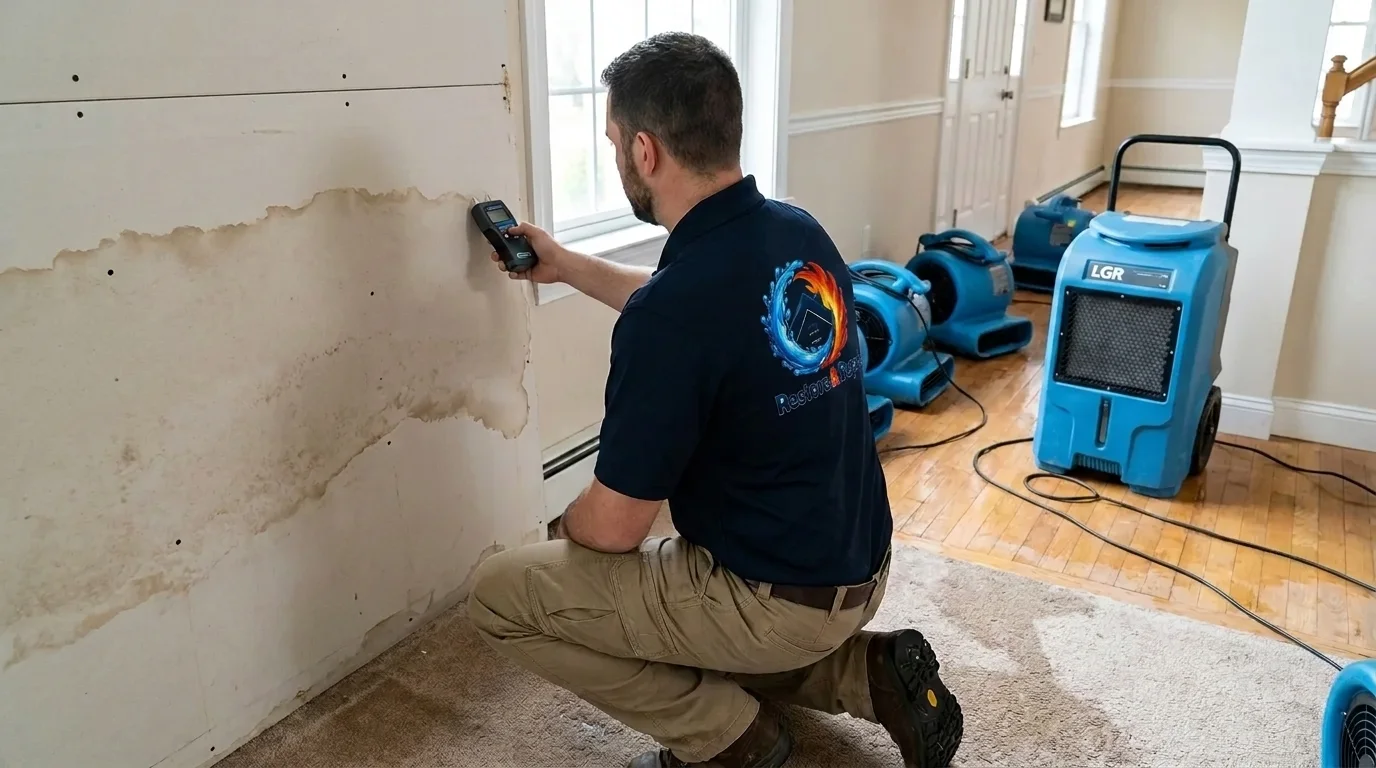
24/7 Emergency Water Damage Restoration in Ipswich
24/7 emergency water damage restoration in Ipswich, MA. IICRC-certified, insurance billing accepted. Call (800) 393-1532.
Our IICRC-certified technicians are dispatched from our Topsfield, MA headquarters and are typically on-site in Ipswich within 60 minutes of your call.
Water damage emergency in Ipswich? We answer 24/7 and send a crew out to stop the spread before it reaches framing, insulation, and the post-and-beam structures so common in this town. Ipswich sits low against its namesake river and the Great Marsh, which means groundwater and storm surge show up in basements and crawlspaces here in ways that inland Essex County towns rarely see. Whether it’s a failed sump pump during a nor’easter or a supply line that let go overnight, the clock starts the moment water hits the subfloor.
Why Ipswich Properties See Water Damage Issues
A lot of Ipswich’s housing stock predates modern building codes by two centuries or more, and the town is well known for having one of the largest concentrations of First Period homes in the country. Post-and-beam framing, wide board subfloors, and shallow fieldstone foundations all move moisture differently than a modern stick-built house. On top of the building stock, the water table near the Ipswich River and the salt marsh sits high for much of the year, so basements that seem dry in summer can wick groundwater after heavy rain or a spring thaw. Sump pump failures and foundation seepage are common calls here, and older homes near the river corridor are especially prone to slow, chronic moisture that owners don’t notice until flooring starts to cup or a musty smell shows up in a closet.
Our Water Damage Restoration Process in Ipswich
We start with extraction, pulling standing water with truck-mounted equipment before it has a chance to wick into plaster, lath, or wide-plank flooring. In Ipswich’s older homes, that distinction matters: plaster and horsehair lath absorb water slower than drywall but hold onto it much longer, so we adjust drying equipment placement and run times accordingly rather than pulling gear on a fixed schedule. We take moisture readings in framing members, not just at the surface, because a floor that reads dry on top can still have a saturated joist bay underneath. Structural drying follows IICRC S500 guidelines, and we document moisture content daily so the drying log holds up if your insurance carrier has questions later.
Reaching Ipswich from Topsfield
We’re based just down Route 1 in Topsfield, which keeps drive time to Ipswich short for both scheduled visits and active emergencies. That proximity matters most when a pipe lets go overnight or a storm surge backs up a drain near the river: the sooner extraction starts, the less chance water has to migrate into wall cavities or under original wood flooring. We route around Route 1A congestion when needed and coordinate directly with homeowners on gate codes, driveway access, or narrow lanes common in the older parts of town.
Equipment & Methods We Use for Water Damage
Standing water comes out first with submersible pumps and truck-mounted extraction units, followed by low-grain refrigerant dehumidifiers sized to the actual cubic footage of the affected space, not a generic room count. For Ipswich’s older homes with exposed beams or wide-board flooring, we often add injectidry systems to pull moisture out of wall cavities and subfloor gaps without pulling up original material unnecessarily. Thermal imaging helps us find hidden moisture behind plaster and under flooring before it turns into a mold problem, which matters in a town where a lot of the housing stock has irregular stud spacing and uninsulated exterior walls.
Local note
Homes close to the Ipswich River and the marsh edge often have septic systems rather than town sewer, and a flooded basement near a septic tank or leach field needs a different containment approach than a straightforward supply-line break. We check for that before we set up drying equipment, because running fans and dehumidifiers near a compromised septic area without proper containment can spread contamination instead of just drying water damage.
If water’s moving through your Ipswich home right now, don’t wait on it. Call Restore & Repel at (800) 393-1532 and we’ll get extraction and drying equipment on-site to stop the damage before it reaches the framing, the flooring, or the next room over.
Serving Ipswich from our Topsfield headquarters — ★ 5.0 · 2 Google reviews
“Our new Flower Shop, Lavender & Moss, experienced a major HVAC failure that caused extensive water damage and mold throughout most of our retail store. When we first spoke with a large national restoration company, we were told it could take four to six weeks just to begin the process, with costs…” — Meggie, December 2025
Water Damage Restoration in Ipswich: Service Coverage
Frequently Asked Questions
How fast can you arrive for water damage restoration in Ipswich?
How does Ipswich's high water table affect basement water damage restoration?
Do Ipswich's older First Period homes need a different drying approach?
What should homeowners near the Ipswich River do if a storm causes flooding?
Does a septic system on an Ipswich property change the water damage cleanup process?
Will my insurance carrier accept the documentation from a water damage job in Ipswich?
Water Damage Restoration response in Ipswich
Most Ipswich calls see a technician on-site within 60 minutes from our Topsfield headquarters.
Nearby & Related
- 24/7 Emergency Water Damage Restoration in Topsfield
- Restoration Services in Ipswich
- 24/7 Emergency Storm Damage Restoration in Ipswich
- 24/7 Emergency Water Damage Restoration in Andover
- 24/7 Emergency Water Damage Restoration in Beverly
- Contact Restore & Repel
- 24/7 Emergency Water Heater Flood Cleanup in Topsfield
- Water Leak Detection in Topsfield
- 24/7 Emergency Sewage Cleanup and Sanitization in Topsfield
- 24/7 Emergency Water Damage Restoration in Middleton
- The 5 Best Water Damage Restoration Companies in Topsfield, MA (2026)
- Burst Pipe Emergency Checklist: Step-by-Step Response